
Bharat Coking Coal IPO: A 50% Listing Pop or a Reality Check on India’s Steel Story?
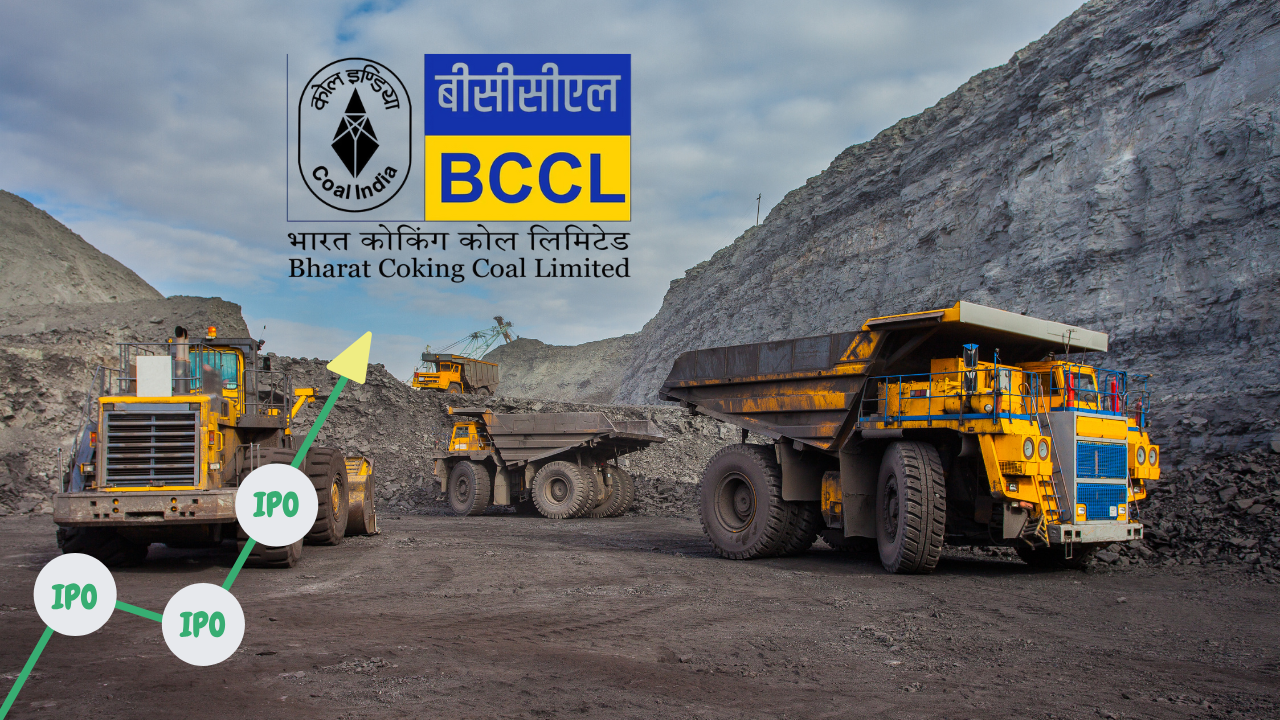
Bharat Coking Coal Limited (BCCL), the crown jewel subsidiary of Coal India and the nation’s largest coking coal producer, is set to open its ₹1,071 crore initial public offering (IPO) on January 9, 2026. The grey market is buzzing with a premium (GMP) of around ₹11.5, signalling expectations of a blockbuster 50% listing gain. But beneath the surface excitement lies a more complex narrative: can this pure-play coking coal company, crucial to India’s steel ambitions, deliver sustainable long-term value, or is it a story overshadowed by quality challenges and sectoral transitions?
Bharat Coking Coal Ltd (BCCL) IPO Snapshot
| Detail | Specification |
|---|---|
| IPO Dates | Opens: January 9, 2026 Closes: January 13, 2026 |
| Price Band | ₹21 to ₹23 per equity share |
| Lot Size | 600 Shares |
| Minimum Investment | ₹13,800 (600 shares x ₹23 upper band) |
| Issue Type | 100% Offer for Sale (OFS) by Coal India Limited |
| Issue Size | ₹1,071 crore (approx.) |
| Listing | BSE & NSE (Tentative: January 16, 2026) |
| Grey Market Premium (GMP) | ₹11.5 (approx. as of Jan 8, 2026) |
| Retail Investor Quota | 35% of the net offer |
| Special Quota | 10% reserved for Coal India shareholders (as of Jan 1, 2026) |
The Financial Anatomy: A Story of Peaks and Pressures
Table 1: Key Financial Metrics (FY21-FY25)
Quality of Earnings & Margin Analysis:
The financials show a dramatic turnaround from loss-making to robust profitability between FY21 and FY24. This margin expansion was driven by operating leverage from increased production (from 30.51 MMT in FY22 to 40.50 MMT in FY25) and improved realizations in a favourable pricing environment. However, FY25 saw a moderation in PAT margin and EPS, indicating potential cost pressures or pricing adjustments. It is important to note that earnings include significant other income (₹598 Cr in FY25).
Red Flags:
- Customer Concentration: Extreme reliance on top 10 customers (83-89% of revenue).
- Lengthening Working Capital Cycle: Trade receivable days have increased from 36 days (FY23) to 40 days (FY25), and further to 60 days in H1FY26, straining cash flows.
- Contingent Liabilities: A sizable ₹3,598.59 crore in contingent liabilities as of Sep 2025, which could impact future profits if they materialize.
4. Balance Sheet & Cash Flow Analysis
- Debt Structure: BCCL’s most significant financial strength is its virtually debt-free balance sheet. This provides immense financial flexibility and reduces vulnerability to interest rate cycles.
- Working Capital Cycle: This is a growing concern. The steady increase in debtor days signifies slower collections from customers, likely other PSUs. This absorbs cash that could otherwise be used for growth or shareholder returns.
- Capex vs. Cash Generation: The company has been generating healthy operating cash flows (₹1,299-1,753 Cr in FY24-25). These funds, along with potential IPO proceeds for the promoter, are expected to support its ambitious capex plans for washery expansion and production ramp-up.
- Free Cash Flow Trend: While operating cash flow is positive, after accounting for capital expenditures (reflected in negative investing cash flow), the net cash flow has been marginally negative in recent years. Future free cash flow will depend on balancing growth capex with operational efficiency.
- Promoter Pledging: Not applicable, as the promoter (Coal India) is selling a 10% stake through this OFS, reducing its holding to 90%.
5. Management & Corporate Governance
- Promoter Background: BCCL is a subsidiary of Coal India Ltd., a Maharatna PSU and the world’s largest coal producer. This provides strategic stability, operational expertise, and resource backing.
- Promoter Holding Trend: Pre-IPO holding was 100%. Post-IPO, Coal India’s stake will reduce to 90%, aligning with SEBI’s minimum public shareholding norms.
- Governance Structure: As a Miniratna PSU, it operates under a formalized governance framework. However, typical PSU challenges include slower decision-making and strategic alignment with government objectives rather than purely shareholder value.
- Related Party Transactions (RPTs): As a subsidiary, significant transactions with Coal India and other group entities are expected. Investors should scrutinize the RHP for details on these transactions to ensure they are conducted at arm’s length.
- Governance Red Flags: The high and rising dependence on third-party contractors (for over 84% of coal extraction in H1FY26) introduces operational and quality control risks. The concentration of power with a few vendors is another point of scrutiny.
6. Competitive Positioning & Moat
- Market Share & Key Competitors: BCCL is the undisputed market leader in domestic coking coal, with a 58.5% production share. It has no direct listed peer in India. Its competition is indirect: Coal India (in thermal coal), NMDC (in iron ore mining), and most importantly, imported coking coal.
- Moat Sources:
- Resource Moat (Strongest): Ownership of 7.91 billion tonnes of prime coking coal reserves is an irreplicable asset and the core of its economic moat.
- Regulatory Moat: The sector’s high entry barriers due to licensing, land acquisition, and environmental clearances protect its position.
- Infrastructure Moat: Its strategic location in established coalfields and ownership of large washeries provide a cost and logistical advantage.
- Pricing Power: Limited. Domestic prices are influenced by import parity pricing. Significant discounts to global prices may be required to incentivize steel mills to buy domestic coal over imported varieties.
- Scalability: The business model is scalable, as evidenced by its plan to increase production from ~40.5 MMT to 54 MMT by FY30. The expansion of washery capacity from 13.65 MTPA to over 20 MTPA will be critical to enhancing value realization.
7. Growth Triggers & Future Outlook (2-3 Years)
- Capacity Expansion: The cornerstone of growth is the plan to raise coking coal production to 54 MMT by FY30, with a targeted revenue of ₹20,000 crore.
- Washery Commissioning: The near-term commissioning of three new washeries (Bhujudih, Patherdih-II, Moonidih) adding 7 MTPA capacity will improve product quality, realizations, and margins.
- Market Demand Tailwinds: The doubling of domestic coking coal demand by FY35 provides a long runway for volume growth. The company intends to shift more supply towards the steel sector, where supplies could rise sixfold to 9-10 MMT annually.
- Margin Levers: Success in the washery expansion will be the key margin lever, allowing sale of higher-value washed coal. Operating leverage from increased volumes will also contribute.
- Long-term Visibility: Visibility is high for the next 5-7 years, backed by firm government focus on domestic steel production and import reduction. Beyond that, the energy transition narrative poses questions.
8. Valuation Analysis
- Current Valuation: At the upper price band of ₹23, the issue is valued at a trailing P/E multiple of approximately 8.6x (based on FY25 EPS). SBI Securities estimates the issue is priced at about 6.4x EV/EBITDA on a post-issue basis.
- Peer Comparison:
- Verdict on Valuation: Based on available multiples, the IPO appears to be priced fairly to slightly attractively, especially considering its debt-free status and dominant market position. However, the lack of a pure-play peer makes precise comparison difficult. The Grey Market Premium (GMP) of 50-53% indicates strong short-term retail demand, but this is not a fundamental valuation indicator.
9. Risk Factors (Very Important)
- Business & Industry Risks:
- Commodity Price Risk: Profitability is highly sensitive to international coking coal prices. A sharp fall can squeeze margins.
- Customer & Vendor Concentration: Loss of a major customer or disruption from a key vendor can significantly impact operations.
- Long-term Energy Transition: The global shift away from carbon-intensive industries threatens long-term demand for coking coal, potentially leading to asset stranding.
- Financial Risks:
- Execution & Regulatory Risks:
The Bull Case: Strategic Monopoly with a Clear Growth Roadmap
Proponents see BCCL as a critical, irreplaceable player in India’s industrial growth story with multiple levers for value creation.
- Dominant Market Position: BCCL is not just a player; it is the player in domestic coking coal, accounting for a staggering 58.5% of India’s total production in FY25. It holds an estimated 7.91 billion tonnes of reserves, representing over 21% of the country’s total coking coal resources.
- Riding the Steel Boom: The core investment thesis is direct exposure to India’s infrastructure-led steel demand. Domestic coking coal demand is projected to nearly double from 67 MMT in FY25 to 138 MMT by FY35. BCCL plans to ramp up production from 40.5 MMT in FY25 to 54 MMT by FY30, with the bulk of incremental supply directed toward steelmakers.
- Value-Addition via Washeries: A key margin-enhancing strategy is the expansion of coal beneficiation. BCCL plans to increase its washery capacity from 13.65 MTPA to over 20 MTPA in the coming years. Washed coal commands a significant premium, improves realizations, and is critical for steel plant consumption.
- Attractive Valuation: At the upper price band of ₹23, the IPO is valued at approximately 8.6x P/E and 6.4x EV/EBITDA based on FY25 earnings. Brokerage SBI Securities finds this reasonable given the company’s strategic reserve base and market position, assigning a “Subscribe” rating.
The Bear Case: Navigating Quality Gaps and Structural Headwinds
Skeptics argue that the company’s “steel story” is currently more narrative than reality, facing significant operational and strategic challenges.
- The “Coking Coal” Reality Check: Despite the branding, about 75% of BCCL’s revenue in FY25 came from the power sector, which uses its coal as a substitute for thermal coal. Only about 18% came from steel companies. This is due to the high ash content (39-40%) of Indian coking coal, which, even after washing, remains at 18-19%—higher than the steel industry’s requirement of 13-14%. Steelmakers primarily use it as a blend with premium imported coal.
- Customer Concentration Risk: The business exhibits a high client concentration, with the top 10 customers contributing over 80% of total revenues. This makes earnings vulnerable to demand shifts from a few large power and steel PSUs.
- Execution and Cyclical Risks: The ambitious washery expansion and production growth plans are subject to execution delays. Furthermore, profitability remains highly sensitive to international coking coal prices. A sustained downturn in seaborne prices squeezes domestic realizations.
- The Long-Term Energy Transition Overhang: While coking coal may have a longer runway than thermal coal due to steel’s role in construction and renewables, the entire fossil fuel sector faces structural risks from global decarbonization policies and environmental norms. This could lead to higher volatility in investor sentiment.
The Verdict: To Subscribe or Not?
The BCCL IPO presents a classic dichotomy: a strong short-term bullish signal against a backdrop of long-term strategic questions.
- For Listing Gain Seekers: The strong grey market premium (GMP) of around 50% indicates a high probability of significant listing gains. The market sentiment, driven by the monopoly positioning and the parent Coal India’s successful wealth creation story, is overwhelmingly positive in the near term.
- For Long-Term Investors: This requires a more nuanced approach. The investment case hinges almost entirely on the successful execution of the washery expansion and the gradual shift of sales mix toward the higher-margin steel sector. Investors must believe in management’s ability to deliver on its FY30 vision.
Final Thought
Consider a conditional “Subscribe” for the long term, with clear eyes on the risks.
- Subscribe for Listing Gains: The combination of a reasonable valuation, overwhelming grey market sentiment, and the strategic nature of the asset makes it a candidate for subscription with a short- to medium-term view on listing pops.
- Long-Term Caution: For investors looking to hold for years, it is imperative to track quarterly trends in sales to the steel sector, progress on washery commissioning, and margin movements. The company’s ability to transition its revenue profile will be the single biggest determinant of long-term stock performance.
- A Unique Opportunity for Coal India Shareholders: Eligible shareholders should strongly consider applying under the 10% reserved quota, as it increases the chances of allotment in what is expected to be a heavily subscribed issue.
In conclusion, the Bharat Coking Coal IPO is more than just a divestment; it’s a wager on India’s industrial destiny. It offers a rare chance to own a piece of a national monopoly at the heart of the steel-making process. However, investors must separate the compelling strategic narrative from the current operational reality and invest with a clear understanding of the quality challenges and execution risks that will define this company’s journey from a predominantly power-sector supplier to a true partner for India’s steel revolution.
Disclaimer: “BrightStake” is only an Educational Platform and is not registered under any SEBI Regulations. All Information on this page is for Educational and Entertainment purposes only. Our content does not constitute any Trading or Investment advice. We make no representation of the Timeliness, Accuracy, Profitability, or Suitability of any share on this Website, and we cannot be held liable for any Irregularity or Inaccuracy. Our research is conducted solely for educational purposes, so please utilise our knowledge to inform your investment strategy.