
GK Energy Limited: A Deep Dive Analysis – Should You Invest in This Solar Power Play?

In India’s rapidly expanding renewable energy landscape, one company has carved out a distinctive niche that aligns perfectly with both governmental priorities and agricultural modernization. GK Energy Limited (NSE: GKENERGY, BSE: 544525), a relatively new entrant to the public markets, has garnered significant investor attention with its explosive financial growth and dominant position in the solar-powered agricultural pump sector. This comprehensive analysis delves deep into the company’s financial health, growth trajectory, and market potential to determine whether it presents a compelling investment opportunity.
1. Company Overview: The Solar Pump Specialist
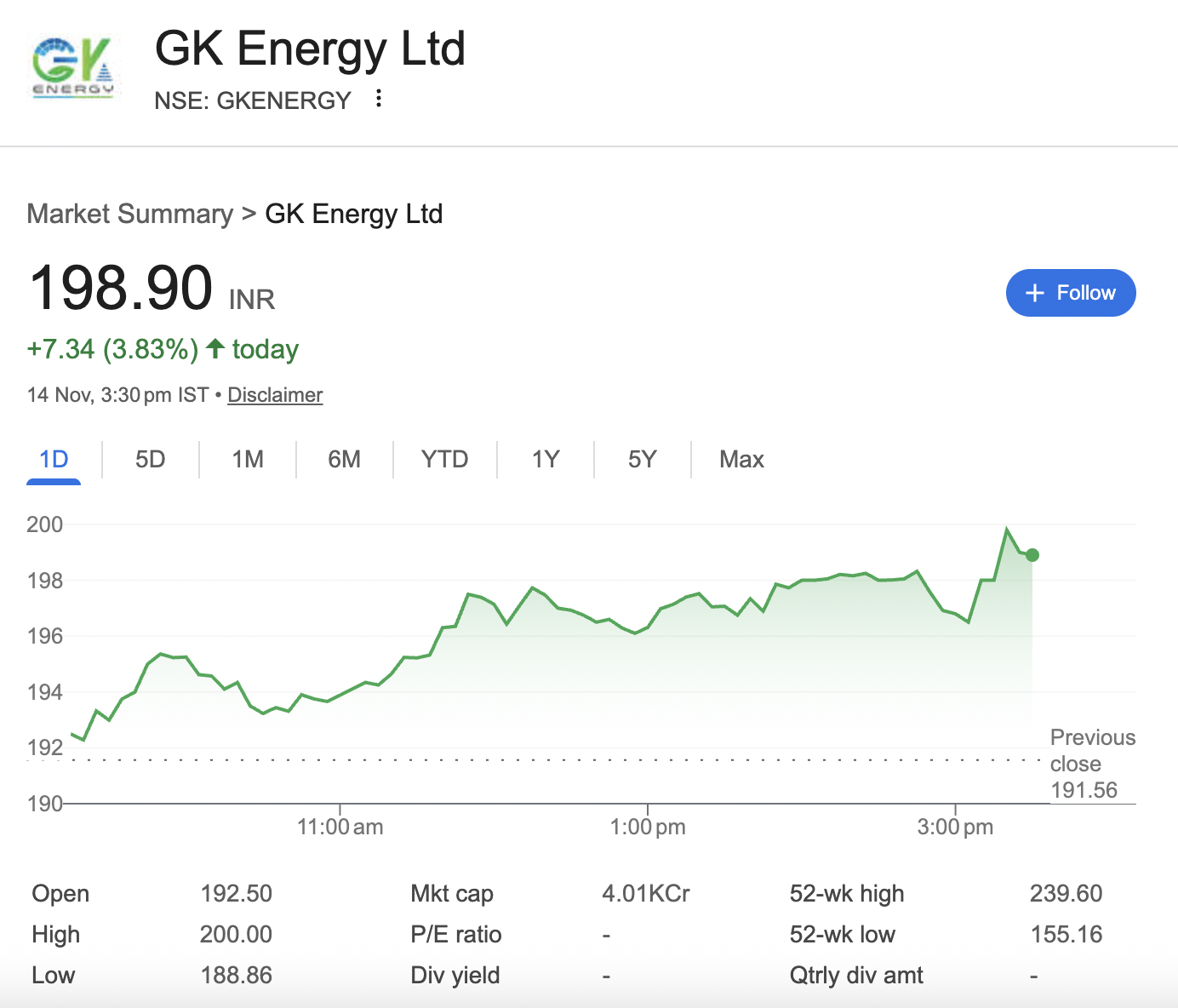
GK Energy Limited is not just another renewable energy company; it is India’s largest pure-play provider of Engineering, Procurement, and Commissioning (EPC) services for solar-powered agricultural water pump systems. Founded in 2008 and headquartered in Pune, the company has established itself as a key implementation partner under the central government’s Pradhan Mantri Kisan Urja Suraksha evam Utthan Mahabhiyan (PM-KUSUM) Scheme, particularly Component-B, which focuses on standalone solar agriculture pumps.
The company’s business model revolves around providing end-to-end solutions—from survey and design to installation and maintenance—for solar pump systems. With empanelment across key agricultural states including Maharashtra, Rajasthan, Haryana, Uttar Pradesh, and Madhya Pradesh, GK Energy operates in regions that collectively contribute over 84% of India’s total solar pump systems installations. Their asset-light approach, where they source components from specialized vendors under the “GK Energy” brand, has allowed for scalable operations without significant capital lock-in.
2. Financial Health: Breaking Down the Numbers
GK Energy’s financial trajectory reveals a company in a phase of hyper-growth, though with some areas requiring investor attention.
2.1 Revenue & Profitability Analysis
Table: Financial Performance (Standalone Figures in ₹ Crores)
| Fiscal Year | Revenue | Revenue Growth (%) | Operating Profit | OPM (%) | Net Profit | Profit Growth (%) |
|---|---|---|---|---|---|---|
| Mar 2022 | 70 | – | 5 | 7% | 2 | – |
| Mar 2023 | 285 | 307% | 17 | 6% | 10 | 400% |
| Mar 2024 | 411 | 44% | 54 | 13% | 36 | 260% |
| Mar 2025 | 1,095 | 166% | 200 | 18% | 133 | 269% |
The numbers reveal an impressive growth story. Between FY2022 and FY2025, GK Energy achieved a compounded sales growth of 150% over three years and profit growth of 340% over the same period. This acceleration continued into H1FY26, with consolidated revenue reaching ₹728.83 crores and profit after tax of ₹84.23 crores.
More importantly, the company has demonstrated significant improvement in profitability margins. The operating profit margin (OPM) expanded from 7% in FY2022 to 18% in FY2025, indicating better cost management and potential economies of scale as operations expanded.
2.2 Balance Sheet & Cash Flow Assessment
Table: Key Financial Ratios & Metrics
The balance sheet reveals a mixed picture. On one hand, GK Energy demonstrates exceptional profitability efficiency with ROE of 101% and ROCE of 74.3% in the last year, significantly higher than industry averages. The company maintains a reasonable debt profile with a debt-to-equity ratio of 0.54, indicating conservative borrowing practices.
However, a significant red flag emerges in the cash flow statement. The company reported negative operating cash flow of -₹2.15 billion and negative free cash flow of -₹2.93 billion over the trailing twelve months. This suggests that despite reporting profits, the company is consuming cash to fund its operations, typically due to increasing working capital requirements—a common phenomenon in rapidly growing EPC companies.
3. Growth Catalysts: The Road Ahead
3.1 Massive Market Opportunity
India’s solar-powered pump systems market represents a substantial growth opportunity. The market is projected to expand from approximately ₹39 billion in FY2024 to between ₹300-320 billion by FY2029, representing nearly an 8-fold growth in market size. With less than 2% of India’s estimated 30 million irrigation pumps currently solarized, the untapped potential remains enormous.
3.2 Government Scheme Tailwinds
GK Energy is a primary beneficiary of several government initiatives:
- PM-KUSUM Scheme: Aims to solarize 1.4 million standalone off-grid pumps and 3.5 million grid-connected pumps, plus 10 GW of decentralized solar plants on farmland.
- State-Level Schemes: Including Maharashtra’s “Magel Tyala Saur Krushi Pump Yojana” targeting 850,000 solar pumps and Madhya Pradesh’s “Pradhan Mantri Krushak Mitra Surya Yojana”.
3.3 Strategic Expansion Initiatives
The company is strategically positioning itself for future growth through:
- Backward Integration: Acquisition of 25 acres for a 1GW solar panel manufacturing facility to control over 70% of its supply chain.
- Diversification: Expansion into solar rooftop projects, with 4.04 MW currently in the order book.
- Supply Chain Strengthening: A definitive agreement for the procurement of 875 MW of SPV DCR Cells to be procured up to March 31, 2027.
4. Risk Assessment: Challenges to Consider
Despite the promising outlook, investors must consider several material risks:
- Customer Concentration Risk: As of FY2025, over 95% of the company’s solar-powered pump systems were installed in Maharashtra, creating geographic concentration risk.
- Working Capital Strain: The company’s trade receivables days increased from 135 days in H1FY25 to 181 days in H1FY26, indicating slower collections from clients (likely government entities).
- Valuation Concerns: With a P/E ratio of 63.71 at the time of its IPO compared to peers like Shakti Pumps (24.11) , the stock appears richly valued, though this has moderated since listing.
- Negative Cash Flows: The significant negative operating and free cash flows could create liquidity challenges if sustained over the long term.
- Dependence on Government Schemes: A substantial portion of revenue is tied to government initiatives, creating policy-dependent business visibility.
5. Valuation & Investment Recommendation
GK Energy presents a classic growth-versus-valuation dilemma for investors. On one hand, the company operates in a high-growth, strategically important sector with a proven execution track record, dominant market position, and exceptional profitability metrics. On the other hand, rich valuations, working capital challenges, and negative cash flows warrant caution.
Investment Recommendation: CAUTIOUS OPTIMISM for Long-Term Investors
For investors with a medium to long-term horizon and higher risk appetite, GK Energy represents a compelling play on India’s renewable energy and agricultural modernization themes. However, investors should consider:
- Position Sizing: Given the volatility typical of high-growth stocks, allocate an appropriate portion of the portfolio.
- Monitoring Parameters: Track quarterly cash flows, receivables days, and order book diversification.
- Entry Points: Consider staggered buying approaches rather than lump-sum investments to mitigate timing risk.
The company’s current order book of ₹863.98 crores (as of September 30, 2025) provides reasonable revenue visibility for the coming quarters. Successful execution of backward integration and geographic diversification strategies could potentially justify current valuations through sustained high growth.
Bottom Line
GK Energy Limited represents a high-growth, high-risk investment opportunity in one of India’s most promising sectors. While not suitable for risk-averse investors, those willing to bear volatility for potential superior returns may find this solar energy specialist worth watching closely. As with any investment, thorough due diligence and portfolio alignment are essential before taking any exposure.
Disclaimer: “BrightStake” is only an Educational Platform and is not registered under any SEBI Regulations. All Information on this page is for Educational and Entertainment purposes only. Our content does not constitute any Trading or Investment advice., We make no representation of the Timeliness, Accuracy, Profitability, or Suitability of any share on this Website, and we cannot be held liable for any Irregularity or Inaccuracy. Our research is conducted solely for educational purposes, so please utilise our knowledge to inform your investment strategy.